The Ohio Administrative Code contains the full text of outdoor play requirements for Type B Childcare Providers. You can find it
HERE.

Paragraph F states that "
Outdoor play equipment designated for climbing, swings, teeter-totters and slides shall have a fall zone of protective resilient material on the ground under and around the equipment. The material shall include, but not limited to, washed pea gravel, mulch, sand, wood chips, or synthetic material such as rubber mats or tiles manufactured for this purpose. Equipment shall not be placed over concrete, asphalt, blacktop, dirt, rocks, or any other hard surface. Synthetic surfaces shall follow manufacturer’s guidelines for depth."
In going through the process of certification, I had many questions about this vague language. How wide does the fall zone need to be? How deep does the material need to go? Which is the best option? Is grass considered a "protective resilient material?" Do we excavate and back fill with material or would it be better to establish some sort of barrier to hold the material back? And most importantly, how were we going to pay for all this?
I thought I would include our experience here to help new providers with their own decision making.
Transition area: to edge or not to edge?? 
I am still on the fence about this one. We are trying to make the area safer and erecting a barrier with plastic timbers or concrete bricks creates a tripping hazard. If you make the fall zone wide enough, this may not be an issue. But most home providers do not have the resources to pay for more "protective resilient material" than they actually need. The barrier also creates another area you need to tend with the electric edger. This may not be an issue for you if, like me, there is a collection of strong teen boys living in your house who love playing with power tools. The barrier DOES do a great job of keeping the material out of the lawn while also creating a vivid reminder for your little clients as to how far they are allowed to roam without incurring your wrath.
If you opt for excavation like we did you may be in for some unpleasant surprises. Underneath a very shallow layer of topsoil (about 1/2 inch) we found what Gilfeather Construction(no wonder they went belly up) used to level out our back yard. Pieces of broken drain tile, broken cement, large rocks, cigarette butts, aluminum cans and a plethora of other construction refuse. That debris combined with the rock hard clay led two contractors to quit on us before we found someone willing to finish the job. So depending on where you live and how difficult the soil is going to be to dig out, excavation may end up costing much more than a barrier system.
Size: Under and AroundSome states do regulate the placement and size of the fall zone in a home childcare facility. Ohio is not one of them. The U.S. Consumer Product Safety Commission (CPSC) has created guidelines for home playground equipment. They can be found in entirety
HERE. The section on placement of the fall zone(page 8) states:
Proper placement and maintenance of protective surfacing is essential.
Be sure to;
· Extend surfacing at least 6 feet from the equipment in all directions.
· For to-fro swings, extend protective surfacing in front of and behind the swing to a distance equal to twice the height of the top bar from which the swing is suspended.
· For tire swings, extend surfacing in a circle whose radius is equal to the height of the suspending chain or rope, plus 6 feet in all directions.
There are charts for figuring those formulas on their web site. For the mathematically challenged OR the more adventurous, you can end up with almost the same result if you have your tallest child swing as high as he can and then jump off. (WARNING: Use your own offspring for this method of measurement NOT A DAYCARE CLIENT. Using a daycare client could make this whole process moot.) Have your insurance card handy because there is a small chance this could result in an unplanned trip to the nearest hospital. Mark the grass a foot past where he lands. Measure the distance from the swing set and mark off the same distance in the rear. Viola! You have perfect placement for your fall zone.
Material Choices

1. Wood Chips/Mulch: This is the first material we tried out. Mulch can be inexpensive or even FREE if you can get it from your local street department or utility provider. If you don't have any luck there, check your local Craigslist or freecycle for more sources. The downside to this cheap mulch is that it is not screened for inorganic material(read GARBAGE). It also may contain very large pieces as it is usually just shredded once.
You can also contact your local landscape supply center for a mulch quote. They will supply you with beautiful freshly shredded playground mulch. You should opt for a single shred as mulch that has been shredded 2 or 3 times tends to grab onto the clothing and decomposes much more quickly. Also make sure it is NOT dyed. The dye will rub off on the children's skin and clothes. This mulch will run around $25-$30 a cubic yard.
The major issue with using wood chips or mulch is that it quickly starts to decompose. You will have to add more each year. Even if you are getting it at low/no cost, this can become a hassle.

2. Synthetic Material: The first product that comes to mind when one considers synthetics is shredded rubber. The local playgrounds recently replaced their wood mulch with rubber. It is a good choice because it provides a nice cushion, it warms up nicely in the sun, and it does not need to be resupplied every year. When it is newly laid or gets hot it does tend to release an odor. On VERY hot days it may even burn your bare feet. For the typical home provider the cost of this option is going to be prohibitive.

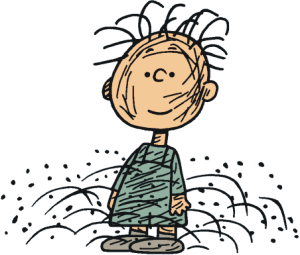
3. Sand: While your little clients may love this idea, I would not recommend using sand. It will retain water. It will get in their eyes when they throw it at each other. Not to mention how much sand burns your feet when it gets hot. As you can see from the illustration, sand is hard to contain and will end up EVERYWHERE, including all over the inside of your house.

4. Washed Pea Gravel: After opting for mulch during the initial installation of our fall zone, we switched to pea gravel when the landscapers demanded another $600 to replenish our mulch to the correct depth only one year later. I had no idea that the mulch would decompose so quickly. Our current landscaper assured us that once we put the washed pea gravel in, we would be done. While it would settle a bit, he could guarantee we would not patronize him again for playground surfacing.
Your clients may well end up throwing this at each other. Just make the price for that behavior more than they want to pay. I warned all of them when we got it installed that outdoor play would be done for them (time limit intentionally not stipulated) the first time they threw the gravel. It hasn't happened yet.
One warning about the washed pea gravel...you have to do the washing yourself. Or wait on Mother Nature to send the rain. The gravel will arrive covered with fine dust/dirt. Since we all know how much parents love picking up children who look like
Pigpen, I'd advise a thorough washing with your hose before letting them play.
Washed pea gravel is priced by the ton. Cost will be similar to mulch at $27-29 a ton.

Here is how ours looked before I washed it.
I hope this information has been of help to you. I highly recommend Dave from Grafton Topsoil for all your landscaping needs. He can be reached at 216-408-8770. Sorry I can't be of help in answering the question of how to pay for this. Just remember one of the most important rules of running a home business in childcare: Save your receipts and DEDUCT, DEDUCT, DEDUCT!
Best of luck in your new endeavor as a home childcare provider. This can be a challenging path but it is also very rewarding.


.JPG)